
Discovering practical ways to organize your closet turns a chaotic daily ritual into a streamlined experience while protecting garment longevity and reducing decision fatigue every morning.
Most people view closet management as a mundane chore, but there is something deeply grounding about opening a wardrobe where everything actually breathes.
Disorganized wardrobes waste precious time, damage delicate fabrics through overcrowding, and obscure perfectly wearable items underneath unmanaged clutter.
Professional interior organizers emphasize that structured home systems directly reduce everyday friction and improve functional living spaces.
Implementing smart storage solutions creates clear visual order, maximizes vertical capacity, and transforms cramped wardrobes into efficient, accessible personal dressing stations.
Mastering closet management requires systematic decluttering, category sorting, container allocation, and consistent seasonal maintenance strategies designed for long-term spatial optimization.
When we take control of our physical possessions, we regain a sense of mental clarity that extends far beyond the bedroom doors.
Summary Table of Contents
- What causes persistent closet clutter in modern homes?
- How to declutter your wardrobe step by step
- How to categorize clothing for fast access step by step
- How to maximize small wardrobe spaces step by step
- How to select proper hangers and storage bins step by step
- How do life stages impact closet organization needs?
- Key storage tools compared by functional performance
- Why does organized clothing storage extend garment lifespans?
- Frequently Asked Questions (FAQ)
- Final checklist for sustainable closet order
What causes persistent closet clutter in modern homes?

Unmanaged wardrobe growth stems from holding worn garments, impulse purchases, seasonal accumulation, and inadequate structural storage components within standard bedroom closets.
We tend to hoard clothing out of nostalgia or unrealistic expectations, hanging onto pieces that no longer serve our daily lives.
Overcrowded hanging rods crush sensitive fabrics, causing severe creasing and hiding items from plain view during quick morning outfit selections.
When you cannot see what you own, you end up wearing the same three outfits repeatedly.
Without designated storage zones, accessories, shoes, and folded knitwear spill across open shelves, creating visual chaos that hinders efficient daily dressing routines.
This constant visual noise creates subtle stress before your workday even begins.
Addressing structural clutter requires clearing unnecessary inventory first before investing in specialized physical organizers or hanging storage accessories.
Throwing new containers at an overstuffed space never solves the underlying issue.
Read also: Understanding two factor authentication Simply
How to declutter your wardrobe step by step
Decluttering systematically removes unused clothing items, creating essential space for garments that fit your current lifestyle and body proportions perfectly.
Step 1: Empty the entire wardrobe space completely
Remove every garment, pair of shoes, and accessory from your closet, placing items onto a clean bed or garment rack to evaluate total inventory.
Seeing everything piled together offers a helpful reality check regarding how much you actually own.
Step 2: Sort items into four distinct operational piles
Group items into keep, donate, repair, or discard categories. Be decisive regarding ill-fitting garments, damaged fabrics, or items unworn over the past year, as holding onto them only stalls your progress.
Step 3: Inspect remaining clothes for seasonal relevance
Separate active seasonal clothing from off-season items. Set aside winter coats or summer beachwear for specialized vacuum storage bags or upper shelf placement, keeping your daily view clear and focused.
Step 4: Clean interior wardrobe surfaces thoroughly
Wipe down empty shelves, vacuum carpeted floors, wipe hanging rods, and dust cabinet corners before returning curated garments back inside your clean closet.
Returning fresh clothes to a dusty space defeats the purpose of the project.
++How to choose safe flooring for home
How to categorize clothing for fast access step by step
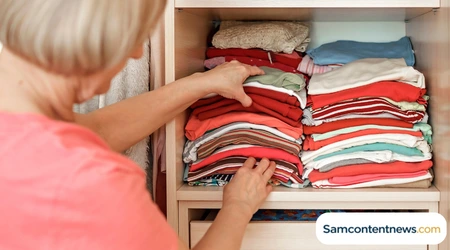
Sorting garments into logical subcategories speeds up daily outfit assembly while maintaining visual harmony across all hanging rods and open storage shelves.
Step 1: Group garments by functional item type
Arrange clothing into distinct functional groups, placing short-sleeve shirts, long-sleeve button-downs, trousers, skirts, dresses, and jackets into dedicated hanging sections.
This simple structure eliminates searching through mixed racks.
Step 2: Sub-sort each garment category by color spectrum
Organize items within each category from light to dark shades. Color coordination creates immediate visual appeal while making specific garments effortless to locate instantly during rushed mornings.
Step 3: File-fold knitwear and casual t-shirts neatly
Fold sweaters, activewear, and cotton t-shirts vertically inside drawers or shelf bins. Vertical filing prevents fabric stretching and allows full visibility without disturbing stacks when pulling out a single item.
Step 4: Establish dedicated accessory and shoe placement
Position footwear on low angled racks or clear shoe boxes. Store belts, ties, scarves, and handbags in hanging organizers or drawer dividers for fast access and protection.
++Best ergonomic home office setup tips
How to maximize small wardrobe spaces step by step
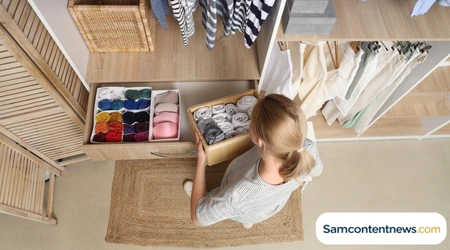
Optimizing limited closet square footage requires leveraging unused vertical height, interior door surfaces, and specialized space-saving hardware components.
Step 1: Install double hanging rods on tall walls
Add a secondary lower hanging rod underneath shorter garments like shirts and folded trousers, instantly doubling available hanging capacity within single tall closet bays without expensive remodeling.
Step 2: Utilize over-the-door storage racks and hooks
Mount sturdy over-the-door organizers to hold footwear, scarves, belts, or daily accessories, transforming empty door panels into functional, space-efficient storage zones that keep small items contained.
Step 3: Position shelf dividers on open upper shelving
Place clear acrylic shelf dividers along upper built-in shelves to keep stacked sweaters, purses, and linens upright and neatly contained without tipping sideways into messy piles.
Step 4: Incorporate slim tiered hanging hardware
Replace bulky wooden hangers with space-saving velvet hangers or tiered skirt clips to minimize horizontal rod usage and free up crucial hanging space across all sections.
++I Let a Pro Organizer Redo My Closet—Here’s What I Learned
What are the best ways to organize your closet hangers and storage bins?
Selecting proper storage hardware prevents garment deformation, protects delicate knits from snagging, and maintains uniform aesthetic order throughout your entire wardrobe.
Step 1: Match hanger types to specific garment fabrics
Use slim velvet hangers for delicate blouses, sturdy contoured wooden hangers for heavy wool suits or coats, and padded hangers for delicate silk items to preserve natural shoulder shapes.
Step 2: Select breathable canvas or clear plastic bins
Store seasonal items in breathable cotton canvas bins to prevent moisture buildup, or choose clear plastic containers for easy content identification on high shelves without pulling down every box.
Step 3: Implement modular drawer organization inserts
Insert adjustable honeycomb or fabric drawer dividers inside dresser drawers to keep socks, underwear, and small accessories neatly separated and visible at a glance instead of forming chaotic piles.
Step 4: Label opaque bins and storage boxes clearly
Affix clear printed labels to solid fabric bins or upper storage boxes, identifying contained items like winter accessories, workout gear, or extra linens precisely so everyone knows where items belong.
Public management standards detailed by institutional guidelines emphasize that systematic spatial organization significantly improves daily operational efficiency and facility maintenance, a principle that applies just as powerfully to home environments.
++Her 6 Storage Tips Transformed My Overstuffed Closet, and Now I Have Room to Spare
How do life stages impact closet organization needs?
Major life stage transitions shift daily wardrobe requirements, spatial demands, and organizational priorities, forcing individuals to adapt storage systems to match evolving lifestyle realities.
Starting a corporate career, transitioning to remote work, entering parenthood, or downsizing into urban apartments alters functional garment ratios dramatically.
Remote professionals require expanded comfortable activewear storage, while corporate executives need specialized suits and structured dress hanging capacity.
Parenthood introduces rapidly changing children’s clothing sizes, necessitating adjustable modular shelving, accessible low bins, and frequent seasonal sorting routines.
Similarly, retirement often shifts wardrobe focus toward casual leisure wear, allowing heavy professional attire to be archived or donated.
Recognizing how life stage changes influence clothing usage allows you to adjust closet hardware, shelf configurations, and sorting rules proactively.
Aligning wardrobe storage with your current daily routine keeps your home organized and functional.
Key storage tools compared by functional performance
Evaluating specialized closet organizers helps you select hardware solutions that maximize available space, protect garment fabrics, and fit your specific budget constraints.
| Storage Hardware | Primary Functional Benefit | Recommended Garment Type | Spatial Efficiency Rating |
| Slim Velvet Hangers | Prevents slipping & saves rod space | Blouses, shirts, light dresses | Excellent (Saves 30% space) |
| Clear Acrylic Dividers | Keeps stacked items upright | Sweaters, handbags, jeans | High (Maximizes shelf height) |
| Over-the-Door Racks | Utilizes unused vertical door space | Shoes, scarves, belts, bags | High (Adds extra storage zone) |
| Vacuum Compression Bags | Condenses bulky off-season items | Winter coats, duvets, blankets | Superior (Reduces volume 75%) |
| Modular Fabric Bins | Conceals small accessories neatly | Underwear, socks, activewear | Moderate (Improves drawer order) |
Combining these storage tools creates a customized, highly functional wardrobe environment tailored specifically to your clothing collection and physical bedroom closet dimensions.
Which smart ways to organize your closet preserve fabric quality?
Proper clothing storage protects delicate textile fibers from stretching, snagging, crushing, and environmental degradation caused by improper hanging hardware or overcrowded storage conditions.
Heavy wool sweaters hung on thin wire hangers stretch irreversibly over time, causing misshapen shoulder bumps and fabric sagging that permanently ruins garment fit.
I learned this lesson the hard way after ruining a favorite knit years ago, and I now insist on folding all heavy knits flat.
Compressing silk dresses or structured suit jackets onto overcrowded rods generates deep friction wrinkles, breaking natural textile fibers and weakening fabric integrity over repeated seasons.
Storing clean, dry garments inside breathable containers shields fabrics against dust accumulation, sunlight fading, pest damage, and ambient moisture, preserving garment quality for years.
Investing time in proper folding techniques, supportive hangers, and controlled storage environments protects your financial wardrobe investments while keeping clothes looking pristine.
Public consumer standards published by environmental safety agencies emphasize that proper textile care and maintenance significantly extend product lifespans while reducing unnecessary household waste over time.
Frequently Asked Questions ( ways to organize your closet)
What is the best way to store heavy wool sweaters without stretching them?
Fold wool sweaters neatly and store them vertically inside drawers or stacked on open shelves using acrylic dividers, never hang heavy knits on traditional hangers.
How can I keep my closet smelling fresh naturally without chemical sprays?
Place natural cedar blocks, dried lavender sachets, or activated charcoal bags on shelves to absorb excess moisture and repel insects without damaging sensitive fabric fibers.
How much hanging space should I reserve for long dresses and coats?
Reserve at least three to four feet of full-length vertical hanging space for long dresses, formal gowns, and full-length winter coats to prevent hem creasing.
Exploring sustainable ways to organize your closet empowers you to transform an overcrowded wardrobe into a serene, functional personal dressing space that simplifies daily routines.
By implementing smart categorizing methods, maximizing vertical storage capacity, and protecting garment textiles through proper hanging hardware, you build a durable system that lasts.
Embrace these practical closet management strategies today to enjoy an effortless, beautifully organized wardrobe that serves your daily lifestyle needs seamlessly.